Well, that was an experience.
In my last post, I talked about the run up to our first Board of Director's meeting. We had that meeting on Friday.
Sooo... Things I learned from my first board meeting as a first time CEO:
Tell your CMO not to try out his EVDO highspeed wireless card with Skype (for the first time) to call into the meeting.
Make sure you've checked every single one of your spreadsheets and that all the numbers match up perfectly, because your directors are going to find the ones that don't quite jive, guaranteed.
Make sure you have enough time. If you need 3 hours (not, say, 2) Schedule 3- not 2.
If the meeting time gets changed, make very sure all the directors know about it at least a week beforehand, even if you're not setting up the meeting personally. You should, personally, check to make sure everyone's on the same page on day and time. This seems obvious (and like a small thing). It's not.
Ride herd on the time spent on each agenda item. Directors will be happy to go deep and you're almost certain to run out of time before you run out of agenda items you wanted to go over
Make sure all your directors have all the same information in hand when or before you start the meeting, assuming somethings been added since the directors package went out. This is especially true if one or more of your directors is remote.
The more well processed and organized information you have for your directors to work from, the better your output from your directors will be. The opposite of this is also true.
Most of your directors are great at dealing with a lot of data (they do this a lot, they're masters at it really- almost certainly better than you). Don't water it down, don't make it as dense as plutonium; find your board of directors 'data happy place'.
You will get this wrong the first time.
Let them help you. If they want to directly engage in different aspects of your business, your first reaction might be to step back from it: Don't. You cannot buy the kind of help they can give you.
This last one (above) is really important: If you're a new first time CEO, you're used to running the show and doing it your way. And you're most likely used to making all the calls. If you've got a great set of directors, they can multiply your strengths and they can help you (quickly.. maybe a bit painfully.. but quickly) identify where you're weak and help you fill in the gaps.
Identify your directors personality types. You can do a short hand version on a sliding scale with pure metrics/numbers on one end and touchy/feely on the other end.
Director B Director A Director C
<-------|--------------|----------------------------|-------->
Metrics on X How ya feeling about X?
Each of your directors is likely to be able to operate at any point on the scale, but they're most comfortable in one area, most likely weighted toward one end or the other.
Plan your presentation of information (and the help/direction you're going to ask for) to cover the personality types of each of the directors.
Did I do all this? Nope. But I learned from the meeting that, to have a great board meeting, this is (some) of the stuff you should be thinking about and putting in place before the meeting.
How did it go? You'd have to ask my directors, but I'd rate it a C- C+. I clearly have a lot to learn. Luckily, I'm a pretty quick study. We have a lot of work ahead of us, but with this group, I'm absolutely certain that we're going to have a much, much more successful company with this board than we would have had without it.
Monday, October 16, 2006


Thursday, October 12, 2006
The First Board Meeting
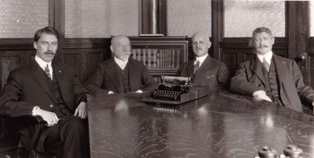 Our First Board of Directors Meeting is tomorrow.
It's been an interesting experience. The board is made up of 3 of our investors (Brad Feld, Niel Robertson and Jerry Colonna) along with Marsha Davis, our CFO and myself.
Brad and Jerry have been on the boards of, I would guess, hundreds of companies. They've been to thousands of these. Niel's started several companies and been to more than his fair share himself.
Me? My first. At least as a CEO.
Yes, I've been one of the guys who presents to the board before (usually some staid group of industry luminaries at a Fortune 50 company). I always knew they were just tolerating me though. They generally weren't really sure what I was talking about (the curse of being the guy in a big company who's presenting the 'vision' and future directions). You'd think they'd find that interesting... oddly, these companies tend to shy away from things that change their businesses. Even really good companies. Like Mike "the Diesel" Spindler, then CEO of Apple, saying to me in a side conversation in the early 90's 'ya, vell...dis Internet ting.. I don't know.."
This is different. These are guys I really like and respect. People that have built or been instrumental in creating very real and successful entities from nothing. Folks I've spent some time with. Guys I'm getting to know. And damned smart.
The process of getting this first meeting together has been interesting, thought provoking, fun and slightly uncomfortable. Most of all, it's been very useful.
The majority of it's been done via email and a get together or two. Niel, Jerry and Brad gave us some area's they wanted to get familiar with, including our latest P&L's, current revenue, our 12 mo. proforma, information on our revenue models, metrics we should be tracking, strategies for dealing with user generated content, product roadmaps and thoughts on cash/funding now and out in the future.
We send them some info, they asked questions, then some more questions. We'd followup with more info. A few more questions and it's the day before the meeting! Just like that. This happened over a two week period. No way would we have been able to go over this much info and have the give and take, ability to answer with reasonably complete answers and the depth in a single board meeting. What do we get from this? A board that's reasonably up to speed on a new business in a new market with a new technology, right out of the gate.
Brad and I got together to talk about it over some great Sushi (if you ever go to Sushi with Brad, let him order, you'll be more than happy with his choices). Jerry, Brad and Niel, based on our information, how we answered, and with what information, quickly zero'd in on the areas they thought we could use the most help and direction. And they nailed it. Brad shared that with me and now I'm going in knowing what the issues are and what we need to work on.
So, the meeting tomorrow will focus primarily on those areas. I doubt we'll spent much time reviewing numbers (we've already done that), and some of the ways our business works (like dealing with content issues ) and other data/reporting oriented tasks. Mostly Covered.
What do we get by being so interactive with the board before hand?
We'll get a full on blast of about 50 years of world class strategic and tactical expertise directly focused on our business. This from guys who've seen just about all of it (from the heights of the dot.com boom to the crash and moribund years following it), and still love doing what they do.
We don't get a meeting where half or 3/4th of the available time is spent going over the numbers and what are really 'reporting' type topics. Special thanks, again, to Andy Sack of Judys Book who talks about how to avoid things like through the painful experience of doing it first. I read, and I learned. Check out his blog for alot of other great insights as well.
Of course, we haven't had the meeting yet, could implode, but I doubt it. Everyone involved is all about making it successful and, after all the prep and interaction, I'm looking forward to it.
Wednesday, October 11, 2006
Andy's got some magic
This is cool, and I'm going to do it with ClickCaster at our next group meeting.
Andy's the CEO of Judy's Book (click here for the Seattle version of the site: JudysBook ) and he's got some great approaches to business. I've only been reading his blog for a little over a month now and I've already gotten some incredible insights from some of the shortest of posts. Very Zen Andy... keep it up man!
On deadlines and director meetings
All I can say is shit.
Our first Board of Director's meeting is Friday. And we have a big deadline for delivery of a custom podcasting site for one of our customers, and, of course, we rolled out a slew of new features and capabilities, all this week. And, of course, all the fun that goes with it (ton's of directors questions; requests for more info; oh.. yea, that's a serious bug we didn't catch before rollout; you want that new server farm up and running when? That's funny Scott; the artist and the developer fight, all of it at once).
Always seems to work that way doesn't it?
The good news is the team is pulling together well, and we're identifying (and addressing) the holes in our communications systems, processes and methodologies for getting things done.
Sometimes, even though it's damned frustrating some days, overall, I can't think of anything I'd rather be doing than getting this startup company from 'emerging' to real. I haven't worked so hard, slept so little or had so much fun in years.
Monday, October 09, 2006
Gas Price Manipulated To Influence Nov. Elections?

Noticed how drastically the gas prices have come down the last month? I get gas as Costco, and go sometimes 3 or more weeks before filling up (thank you Toyota Yaris) and I keep my receipts. The last price? $2.97 for regular in Mid Sept. Today? $2.29. That's a significant drop. Think there's any connection between that and the upcoming elections? Did you know that Bush's popularity rating is more directly tied to the price of gas than just about any other single polling measure out there? It is.
Ahh.. come on. That can't happen right?
From Lew Rockwells blog (www.lewrockwell.com):
An article appeared this Saturday in the New York Times pointing to some unusual trading by Goldman Sachs in the gasoline futures market. As Raymond Keller, who spotted the article, points out, "They always hide the good stuff in the low circulation Saturday edition."The article's worth reading. One telling paragraph from the New York Times article is worth repeating:
President George W. Bush nominated Henry M. Paulson, Jr. to be the 74th Secretary of the Treasury on June 19, 2006. The United States Senate unanimously confirmed Paulson to the position on June 28, 2006 and he was sworn into office on July 10, 2006. Before coming to Treasury, Paulson was Chairman and Chief Executive Officer of Goldman Sachs. So what does Goldman do just weeks after Paulson is sworn in as Treasury Secretary? It announces a subtle move that drives down gasoline prices, short-term. Nice move, coming just months before the election.Give it a read. It's titled "Change in Goldman Index Played Role in Gasoline Price Drop" by Heather Timmons. The article is here (signup required).
Saturday, September 23, 2006
RETAIL-IATION

WAL-MART WARNS STUDIOS OVER
DVD DOWNLOADS
Apparently, Wally World is feeling the heat from the digital age and worried about sales of those blobs of plastic we lovingly call DVD's. From a story by Tim Arango in the New York Post (click on this entries title for the full story):Several weeks ago, in the midst of rumors that Apple was close to announcing a deal with Disney, Wal-Mart's David Porter - the executive responsible for stocking the retailer's shelves with DVDs and CDs and whose influence is so immense in Tinseltown that he's been named to Premiere magazine's annual power list - made the rounds of Hollywood studios.
His message, according to a studio exec involved in the discussions: that there would be "serious ramifications" if the studios hopped in bed with Apple.
"They threatened to hurt us in terms of buying less products," said this person.
"Serious Ramifications"? I'm pretty sure those are the exact words used by the Mob's lawyer in The Godfather while talking with a Senator about who would, or wouldn't give them access to the casino's of Las Vegas. Movies, imitating life, imitating movies. Spooky.
With $5 Billion (yep, a B) in DVD sales in Q4 alone, Walmart is by far the largest distributor of movies in the US. This gives them some pretty heavy cred in Hollywood. It's similar to how Blockbuster Video used to help the studios 'decide' what movies would be funded (and not). If you do a historical evaluation of the types of movies sold from the time "BB" (before Blockbuster) and after, you'll see a large number of 'formula' movies spike up as Blockbuster became the McDonalds of Movie distribution.
Now, with DVD players costing $39, it's about retail, and who's the king of retail in this country? Walmart, of course. And so the power curve shifts.
Walmart cuts the price of current DVD's, and makes most of it's profit from DVD's on the 'inventory'. The other 50,000 title's it carries in it's DVD section, where the price is generally higher. But it's limited by the amount of shelf space each store can carry.
Walmart, to date, hasn't been able to translates it's strengths in the logistics of retail overly well to the online world. Largely due to fact that the barriers to entry online are a little less than the cost of building 4000 Walmart stores to blanket the country (does Longmont REALLY need 2 Walmarts? One one on each end of town?).
Our own experience with ClickCaster bares this out. Although nothing close to the potential scale of Apple, we've recently cut a deal with the folks over at Gameznflix (www.gameznflix.com) who have access to a library of thousands of (mostly older) video products that include things like pre WWII cartoons, Hitchcock movies and other stuff that you just don't find on at Walmart (or iTunes). Classic long tail stuff. Their cost to put this up? The price of labor to upload and a broadband connection. They get paid everytime someone downloads a copy though, and the cost of building a 100,000 SF supercenter never enters the equation.
If Apple (and companies like GamezNflix, using technology from companies like ClickCaster) can effectively carry catalogs of digital content that, once encoded and uploaded to a server, have close to a zero distribution cost, the games changed forever. Just look at the music industry for a preview.
How can Walmart compete with this?
- It could jump on the online bandwagon. Build it's own movie distribution service on the web.
- It could expand it's physical DVD distribution by making their DVD sections bigger
- It can threaten the content creators to 'not work with the new guys'
With #2, they'd up their numbers, but the only way to really carry every movie ever made would mean converting entire Walmart supermarts to massive DVD stores. Even then, they'd miss a few of the more obscure titles (companies like ClickCaster are already making it possible for someone to make an indie movie, upload it and sell it online at zero cost to the movie maker until the movie sells when a cut is then taken by the distributor.. but not before). And the cost of managing the physical inventory would make them uncompetitive with the near zero cost of digital distribution.
With #3, well, I'd expect the DOJ to get involved if they actually DID anything to retaliate against the studios (or any content providers). You can't go around saying "use the new guy and I'll break your legs". I know Walmart's similar to the Mafia in many ways, but this would be just a little too blatant, even for our business friendly culture.
So what's going to happen?
It'll take 5 years, maybe more, but with broadband more ubiquitous then dialup, and computers more than powerful enough to run people's media lives (including their TV's), the power base will shift.
The movie industry can get in bed, fast, with the digital distribution guys, or it can end up like the recording industry, losing double digits in sales year over year and suing their customers.
The User Generated Content effect:
There will always be demand for high quality, highly produced movies. But it'll drop off as more and more interesting content from the rest of us becomes available.
When I can buy an HDTV quality video camera for $600, with a built in 40 gig hard disk, I can make a movie. Will it suck? Yea, that's likely. Will all of them suck? Nope. We see it now in the music world. You can buy a studio quality mixer and mics for $300. Software, $100. Computer, $500. $900 (new) and you've got a real recording studio. And don't tell me that the quality of music has gone in the toilet. What we're seeing is really good and some great musicians are now able to create their own 'albums' (whatever that means nowadays) and distribute them through multiple channels (iTunes, MySpace, Raposdy, and a dozen others) that were never available to them before. They are very effectively bypassing the recording studios. What's different here between the movie and recording industries? I'm not seeing much difference at all. The only real difference is the movie industry has A CHANCE to do it right. Will they? I sincerely hope so.. but I have my doubts.
And Walmart, in the end, becomes the place you can buy the fewer and fewer big budget movies made and distributed as overpriced blobs of plastic for your $39 walmart DVD player.
Sunday, September 17, 2006
Was the 2004 Election Stolen?

Was the 2004 Election Stolen?
Republicans prevented more than 350,000 voters in Ohio from casting ballots or having their votes counted -- enough to have put John Kerry in the White House.
Republicans prevented more than 350,000 voters in Ohio from casting ballots or having their votes counted -- enough to have put John Kerry in the White House.
GREAT article in the Rolling Stone on how Bush did, indeed, rig the 2004 election. Lots of pretty compelling arguments and statistical analysis that shows that's what happened (Bush being elected) was, pretty much, impossible. I love the title. That question mark at the end is one of the tricks networks like Fox use to make accusations without having to support claims. Kind of like saying "Could your mother be a whore?" (Thanks to Jon Stewart for this example). An excerpt from the article:
But what is most anomalous about the irregularities in 2004 was their decidedly partisan bent: Almost without exception they hurt John Kerry and benefited George Bush. After carefully examining the evidence, I've become convinced that the president's party mounted a massive, coordinated campaign to subvert the will of the people in 2004. Across the country, Republican election officials and party stalwarts employed a wide range of illegal and unethical tactics to fix the election.So what you say? Nothing we can do about it now. True. But you can effect the next round. Get your butt to the polls this November and vote. Plain and simple. Enough people are aware of this that it's unlikely they'll be able to pull it off again (and since it's not a presidential election and alot harder to coordinate since it's so distributed, it's unlikely they'll try, or so we can hope).

Click on the title of this posting to go to the article, or use this:
http://www.rollingstone.com/news/story/10432334/was_the_2004_election_stolen
Subscribe to:
Posts (Atom)
The Richest Country in the World Is Losing Its Mind, Its Trust, and Its Kids
The Richest Country in the World Is Losing Its Mind, Its Trust, and Its Kids The numbers came in and they're not a political talking p...

-
Our First Board of Directors Meeting is tomorrow. It's been an interesting experience. The board is made up of 3 of our investors (Brad...
-
So, our second board meeting for ClickCaster was yesterday. We had everyone in attendance: Myself and two of my folks (Pete and Marsha) an...
-
Mark this one to my 'get off my lawn' age group, but, it just pisses me off when I'm asked, at a fast casual restaurant where yo...


