Sunday, January 07, 2007

What Every Startup Needs: A King Arthur and a Merlin

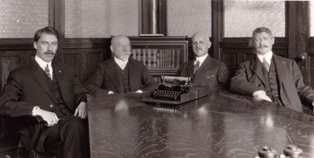
King Arthur or Merlin. Which are you?

I suspect that many if not most successful high tech companies have both as founders. A King Arthur, the front man, the person facing the world and the overall leader, and a Merlin, the magician behind the king who, with Arthur, puts together the magic of the company like products, strategy, teams, vision and council to Arthur.

Think Steve Jobs and Steve Wozniak of Apple, Chad Hurley and Steve Chen of YouTube, and of course, Captain Kirk and Spock of Star Trek (OK, that's a stretch, but you get the idea).

Startups that have both of these archetypes in the early stage mix seem to generally do better than those that don't. Of course, you don't have to have these two, you can start with one or the other, but if you want to truly get both great product and market traction, and do it quickly, you'll be better off if you have both.

So ask yourself: Do you have both? If you don't, and you're a Merlin, get yourself an Arthur. If you're the King already, don't try to do it alone.

Blogs and Newspapers


I got an email today from someone at The Denver Post announcing that they were going to do a business oriented blog.
I’m writing to introduce and invite you to a new blog now featured on the Denver Post website.

blogs.denverpost.com/bizbuzz/category/technology

This blog will feature information and commentary about developments in the rapidly-changing world of technology, but heavily focused on Colorado and surrounding regions.
OK, interesting. Might be worth reading and I'll check it out. But then this:
While this blog – and all of our Denver Post blogs – are not replacements for news, this kind of interaction is designed to supplement and hopefully strengthen the exemplary news coverage you find in our newspaper daily.
This is interesting. They're saying: "This isn't news or meant to compete with news". To a degree, that's true, it's context for news. It's also, often, The News to me. It's all I read, if there isn't a relevant link. Where do newspapers think we get news now? Yes, often, it's an article in the NYT or WSJ if it's national, or the Denver Post or the Boulder Camera if it's local. But, almost always, I read that story now as a link from a blog. Someones blog recommended the story (or referenced it in a context I'm interested in). Either that, or from Google News, Digg or Reddit. I haven't read a paper newspaper in years, and only rarely do I go directly to newspapers websites anymore. I get to them through the context of someones opinion.

If newspapers really wanted to drive the creation and consumption of news on the internet, they should consider using their editorialists as context creators. Encourage and empower those folks writing their editorials (i.e. their blogs.. pretty much the same thing) to talk about things we're interested in, and then reference the stories in their papers (and if they were really smart, other papers and information sources as well). That, assuming I like and or trust the editorial/blogger, is much more valuable to me in finding relevant reading than context free news stories.

Friday, December 22, 2006

Boulder Smartness, education or attitude?


Is Boulder, CO. really America's smartest city? David Cohen in his Coloradostartups blog tidbits section pointed me to the Forbes magazine article on this.

The article, dated December 15th, 2006, in Forbes, titled Amercia's Smartest Cities is here.

They seem to be using two criteria: Percentage of population with Bachelor, Masters and PhD degrees, and 'degree of stickiness' (keeping people in town after they graduate).

I have to wonder if this is a valid criteria. At the same time, I have to admit, Boulder IS a great place (considering it's actual population of a few hundred thousand people) for finding really talented people (or attracting them).

This focus on education level, though, bothers me. Education is a great thing, but at the same time it's also limiting in that it can create a sort of fence around what you're willing to accept as the right way to think about (and effectively, how to do) something. It can limit you. I've known more than my fair share of MBA's from very big named schools that KNEW the only way to size up a market and allocate R&D money, for instance, because they learned it in school and by god, that was how it was done. Period.

I'm not against education, if anything, Colorado needs more and better systems around education, but equating 'smart' with 'education' isn't, really, 100% accurate. Some of the smartest people I know didn't finish college. Hell, the guy who designed the hardware motherboard for the first Macintosh was a high school dropout.

But, the other allures of Boulder remain. Beautiful surroundings, ton's of things to do, healthy lifestyle, interesting people, an open atmosphere for new and offbeat ideas and yes, a high degree of 'smartness' in the air. I like to think education is just one part of that equation though, and, likely, not the biggest part.

Thursday, December 21, 2006

Web 2.0 and VC's= maybe a good thing afterall.


There's been a huge amount written in the blogosphere about how Web 2.0 with it's low startup costs and rapid growth patterns negates (or at least minimized) the need for traditional venture capital.

Fred Wilson of Flatiron Partners in NYC has an excellent blog post up on how, and why, Web 2.0 and VC's mix very nicely, thank you. He sums it up with the following graph:


His premise is simple. The cost, in the early years, of a startup has dropped significantly. As the business takes off, all the usual business expenses (hardware, bandwidth, sales force, etc.) still pop up. So, the costs rise and need for capital required from VC's kicks in.

The upside is much of the risk is removed for VC's in the early stages (due to the low costs) and, assuming your company survives and grows, more of the equity remains in the hands of the founders (because much of the risk was removed along the way, requiring less equity be given up).

Nice trade off all around.

Wednesday, December 20, 2006

4 hours of snow in Boulder

LOTS OF SNOW. Three pictures taken of a table on my back deck. 3:30pm, 5:30pm and 7:30pm. Check it out:


Friday, November 17, 2006

The Second Board Meeting


So, our second board meeting for ClickCaster was yesterday. We had everyone in attendance: Myself and two of my folks (Pete and Marsha) and our directors, Brad, Niel, Jerry by phone, and a guest (David, one of our investors) who's likely to join the board shortly.

We went over some of the mechanics (approving the minutes from the last meeting with some input on how they should be short and highlight via bullet points what was discussed, how to best report finances consistently, etc.) and then went over the current state of the business.

This was an excellent discussion. We went over our activities over the last month such as development, new product capabilities, growth, status of existing customers and contracts, and results of interviews with potential customers but we spent the bulk of our time talking about where the business should go.

We looked at competition and determined we were well positioned. We looked at and discussed other companies our board members were familiar with that had similar business models but were farther down the road in the market and we were able to draw excellent conclusions on what directions we should be taking with our product development, market focus and definition of what the business really was all about.

One thing that really stood out and isn't always obvious to a Web 2.0 type company is an obvious one: Are you a consumer business serving end users or do you sell the platforms and tools necessary to enable others who already have relationships with targeted customer bases? And who's, really, driving your development? The 'perceived' end users customers or the businesses who will actually buy your product and use it to reach their customers?

Are you building your feature set based on what your developers (and their friends) think are cool or on what paying customers are willing to pay for? I know, obvious right? Product management 101 stuff, but it's easy to let those 'cool' things take precedent over the less cool things you can actually sell. Often they overlap, but not always. It's something every resource constrained early stage company needs to watch carefully, and manage even more carefully.

This is a question that I think more and more of the current crop of internet startups will be facing. With the recent pull back from the market (and taking 'parts' out for other future businesses) that Odeo (a company similar to ours in some respects) recently announced, it's pretty clear that not all consumer focused businesses are standing on solid ground.

The first board meeting was great for setup of what's to come and this, the second board meeting, showed us how bringing the full intellectual, market knowledge and general experience of a group of seasoned investors and fellow entrepreneurs has immense value to a young startup.

Most of what was discussed are things we would very likely have gotten to without the boards help and direction, in about 3 months (if we were lucky) and more likely 6 months or more. And in our world, 6 months is, literally, a lifetime.

What's becoming obvious is that by having a highly engaged board that's looking hard at your business, meeting monthly and communicating alot in between meetings is that you have a focusing effect that's exceptionally difficult to get without a group like this helping you to clearly think through the issues.

Often it's simply easier to 'let that problem go' for another month or two with the belief that it'll work itself out. What we did was identify where the weaknesses are and come up with a clear plan on how to address them and shore up the problems, do it with some real discipline and focus, and get ahead of the market, just enough-not too much, to become a major player.

I suspect many boards are more like 'reporting' exercises where the companies execs run through status and what they're planning. There's alot of nodding, a few questions and everyone goes out for lunch.

Not so with our board. We did have lunch (during the board meeting) but what we came out with was a much better view of things like: what our real business is, where we sit in the market, who we need to focus our sales and marketing efforts on and how to get there, much more quickly, than we could have done without the direct input and hands on involvement of a fully engaged board of directors.

We have work to do, and some of it will be difficult and less than fun, but most of it's exciting stuff that moves us to where we need to be. Fast, and with multiple big brains guiding the ship. I'm loving it, and find myself already looking forward to the next board meeting.

Wednesday, November 01, 2006

Chaos


Oh baby, I love it. The big mondo media world is finding size, in fact, does not matter.

From today's Wall Street Journal:
The first round of bids for Tribune Co. have come in low, prompting the newspaper and TV company to notify bidders that it is now prepared to consider offers for parts of the business, say people familiar with the situation.
The brief story then talks about how 'wealthy individuals' like David Geffen are interested in buying parts of the Tribune Company like The Los Angeles Times.

We're seeing this in radio land as well. Rumors are afoot that Clear Channel, with flat profits and no more room to grow, is looking at selling off stations.

Could it be the value of these assets is dropping as they get farther and farther behind how real people are using media? Smearing ink on ground up tree's and sending out energy on a tiny slice of electromagnetic spectrum were once cutting edge technology for media distribution. No more. Geffen is in his 60's. He's interested because he has an ego and 'owning a newspaper' is one of those ego gratifying trophies that an older generation still think of as valuable.

I, personally, read newspapers (from all over the country) daily. But not a single one is printed on paper. I dont' think I've read a physical world newspaper in several years. And I spend alot more time reading blogs that, often, reference a newspaper story. This gives me context (I trust the bloggers perspective which gives me confidence that reading the story is worth my time). 80% of the newspaper stories I read now are filtered THROUGH a blog entry recommending it. Hows that for role reversal?

And the same applies to radio. It used to be at the center of my music world, but no more. Now, I listen to podcasts of personalities playing music I like, or streams from services like Pandora and LastFM that let me create my own radio station on the fly or through linking with other like minded (or not like minded) music fans that recommend things I might like.

Even my favorite radio, NPR, is being supplanted by 'talk' podcasts like David Cohen's Coloradostartups, Diggnation, Web2.0show and some old NPR shows that are getting the podcasting religion like This American Life.

The media landscape is changing fast. Media consumers are rapidly shifting from atoms to bits. Long tails are popping up all over. Social networking is driving content creation and consumption more each day. Much of this was predicted back in 1995 when the web really took off, but it didn't happen quickly. But here we are, over 10 years later, and the tipping point may very well have just hit in earnest. As Gates says: we tend to overestimate what will happen in the next year and underestimate what will happen in the next 10.

Did I miss a meme or buzzword in that last paragraph? Yea, but I got the big ones.

It's a great time to be in the middle of the chaos. The Chinese character for chaos is a combination of two other characters : Trouble and Opportunity. I couldn't agree more.

Meta’s AI Gamble: Hype or Hubris?

  Meta’s AI Gamble: Hype or Hubris? Meta’s latest earnings call was a masterclass in optimism, with their leadership painting a rosy pictur...